


Human capital

Inputs
- Employee-centric approach
- Employee expertise, skills sets and integrity
- Agile, resilient and diverse leadership team
- Human capital technology
- Bargaining arrangements and organisational rights in place
- Robust SHE management system
- Robust policies and procedures
Key initiatives
- Focus on keeping our employees safe, productive, motivated, engaged and connected as we have embedded COVID-19 business processes and practices
- Organisational redesign initiatives to ensure fit-for-purpose operating models and structures
- Initiatives and programmes that break silos, encourage collaboration and leverage geographic presence and expertise
- Continued investment in capability-building for current and future functional and leadership skills needs
- Talent management and succession planning to ensure continuity in respect of critical skills and leadership bench strength
- Focus on achieving equity, diversity and inclusion in the workplace
- Realising female employees' rights and their importance for an equal and sustainable future
- Constructive engagement with employees and representative labour organisations
- Fostering our commitment to integrity and values-driven leadership
- Focus on employee health, safety and well-being
- Compliance with ISO 45001 Occupational Safety and Health Management System by manufacturing sites in Gqeberha, East London, Cape Town, Nairobi, Bad Oldesloe, Vitória, Dandenong, Oss and Notre Dame de Bondeville
- Appropriate and proven remuneration, incentive and performance management practices
- Implementation of Group Universal Incentive Scheme achieving alignment between the Group and business units in a key performance area ("KPA") setting
- Implementation of a 360-degree feedback process as part of the enhanced performance management process
- Continued investment in technology to enable an agile workforce
Outcomes
- A supported, connected and productive workforce during the COVID-19 disruption
- Skilled, capable and diverse teams motivated to achieve the strategic objectives of the Group
- Maintenance of a high performance culture, clear and aligned objectives and the retention of skills
- Stable and constructive industrial relations
- Employee brand ambassadors of Aspen, our reputation and our values-based approach to ethics
- Safe and healthy workforce
Value created for stakeholders

- Provision of employment and opportunities for growth and development in the geographic regions in which we operate
- Diverse and inclusive working environment, free of discrimination and harassment.
Material sustainability topics covered in this section:
- Employee health and safety
- Employee well-being
- Labour rights
- Diversity, equity and inclusion
- Workforce development
- Fair compensation
A team that has shown resilience and focus despite disruption caused by COVID-19
Our diverse team of skilled, accountable and engaged employees are critical to the success of the Group. The unprecedented disruption caused by the global COVID-19 pandemic required us to reset and refocus our human resource priorities to provide an enabling, supportive and safe environment for our employees during this period of significant change, uncertainty and stress. As a critical element of the business continuity plans across the Group, we continued to prioritise keeping our people engaged, connected and well-informed as we adapted our ways of working as circumstances required. We implemented remote working for employees who were able to effectively work from home and provided them with the required support and tools to remain productive and engaged and, where we were able, implemented, hybrid working arrangements. The focus of our manufacturing operations has been on supporting our people to adapt to the measures implemented to reduce the risk of infection such as social distancing, shift rotations, increased personal protective equipment requirements and periods of self-isolation, where necessary. We have also had to reset our operations, capacitate our teams and reskill current teams to respond to the vaccine-manufacturing focus. We focused on providing flexibility where possible, supporting our employees as they faced significant shifts in all aspects of their lives. We adapted leave policies and placed an increased focus on employee well-being support initiatives. We enhanced our leader support and development to provide our leaders and managers with effective tools and skills to provide inclusive leadership and foster collaboration in their teams. We have taken the opportunity to progress our policies, procedures and practices to help us continue to enable an environment that respects and nurtures the diversity within our business, despite the location of individuals. Maintaining an inclusive culture was at the centre of our approach, underpinning our overarching duty of care for our employees' wellness and safety.
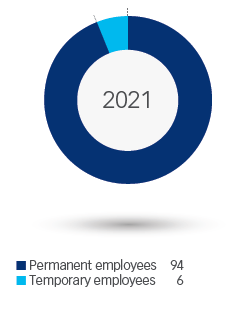
Total employees
(9 106 employees) (%)
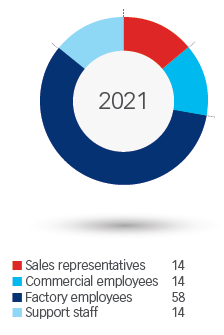
Employee categories
(9 106 employees) (%)
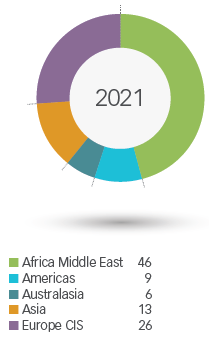
Total employees by region
(9 106 employees) (%)
Creating an environment in which our employees have a sense of belonging and can thrive
During a year in which we have been asked to stay apart and social distance, we have had to ensure that our employees across the world feel connected. Creating this sense of connection and belonging showed up in the communication focus, namely digital town hall meetings for businesses and the Group as a whole, employee network sessions and one-on-one digital meetings between colleagues. Our leaders were able to step up and provide inclusive leadership while driving innovation and performance.
We seek to attract, assess, develop and retain appropriately diverse, qualified and experienced individuals who present the right mix of technical and behavioural competencies for our targeted business requirements. We also continue to build sustainable future-fit structures that are both relevant for our business needs and agile, to allow us to adapt in times of disruption in order to continue to deliver our life-enhancing medicines to the world.
The human resource strategy continues to guide the focus for all human capital priorities, supporting the business in responding to a challenging environment of increasing competition, cost pressures, organisational changes, digital transformation and regulatory compliance. The strategy aims to create an environment where future-fit human capital solutions have a global focus, while maintaining localised relevancy. It has, at its core, the objective of fully integrated talent management, enhancing the employee experience by providing interesting, challenging and meaningful work, creating career growth opportunities, offering competitive and differentiated remuneration and ensuring an overall positive work environment. Our human resource information system strategy and our equity, diversity and inclusion framework received heightened strategic focus during the year.
We pride ourselves on having committed and engaged employees. A key contributor to employee engagement is to ensure clear role profiles and the articulation of expected deliverables. Our enhanced global performance management framework continued to provide a standardised approach to performance management while respecting the local dynamics of managing high performing teams, ensuring that pay-for-performance underpins our remuneration strategy. The framework also encourages 360-degree feedback, alignment of Group, business unit and individual objectives and continuous performance dialogues.
As the Group evolves, the human resource function continues to adapt to provide more integrated and relevant solutions. During the year, the Group human resources operating model was introduced. The model aims to support the evolution of the HR function from human resources management to employee experience, and a support function operating in a federated business model to one that shapes and enables a hybrid business model. This model will create the necessary employee value proposition to attract, retain and develop the talent needed to stay competitive through centres of excellence, communities of practice and a human resources shared service. While aligning to the Group human resources strategy, policies and procedures, our decentralised human resources structures customise their policies to ensure local relevance and compliance with applicable labour legislation. Our global human resources system, implemented in 2017, serves as a Group platform for core employee data and is a strategic enabler for the implementation of the Group's human resources strategy and related processes. To support our goal of people-centred analytics, the global Learning Management System launched in South Africa has been expanded to further business units in the Group. The digitalisation of human resources processes is a further commitment to ensuring a rewarding employee experience which allows for continued engagement, growth and development.
We operate in environments where scarce skills and talents are targeted, and therefore, we are subject to robust and dynamic employee movement, challenging us to ensure that we create a meaningful employee experience aimed at retaining and developing our current talent pool, while proactively sourcing talent in the various labour markets. To ensure that we retain talent we have strengthened our retention activities such as stay-interviews, dynamic induction processes for new staff members, career and performance discussions as well as remuneration reviews to ensure internal equity in pay scales. We have focused on creating development plans intended to equip our employees to succeed in their current roles and develop capability for future roles.
In total, 1 321 permanent and temporary employees were recruited to support business expansion requirements in FY2021 and to replace vacancies or fill new roles.
During the year, 45 employees retired due to either non-work-related ill-health or having reached normal retirement age (less than 1% of the staff complement). No occupational fatalities occurred during the year (2020: none), but we regret to report the non-work-related deaths of 20 employees, many of which were COVID-19 related.
We also embarked on a number of projects to align our organisational structure to operational requirements. This resulted in restructuring having to be undertaken in the South African, Irish and Brazilian commercial businesses as well as at our manufacturing site in Gqeberha, affecting 202 employees. In implementing the restructuring processes, detailed consultation plans were prepared to ensure that the appropriate engagements were held with affected employees and with the relevant labour organisations, such as unions and works councils. Furthermore, following intensive consultations, 183 employees were successfully transferred to Mylan as a result of the sale of the assets of the Thrombosis business in Europe.
Despite us seeing an improvement over the 2020 reporting period, a highly competitive environment in China has contributed to a higher voluntary attrition rate in this business unit. The Group's overall employee turnover rate (voluntary and involuntary) has increased to 15% (2020: 13%).
Workforce learning and development
Investment in human capital contributes to economic and business growth for the benefit of employees, employers and the wider economy. Our commitment to this is demonstrated in our learning and development focus for the year. While organisations deferred training spend over the past year, we kept our focus on building capability while addressing new needs created by the pandemic and changing our business focus. Continuous and focused learning is pivotal to our success.
Building talent to drive performance excellence
Our dynamic environment requires our employees to be adaptable, results-driven, self-motivated, decisive and responsive team players. All employees are provided with equal opportunities for development, advancement and promotion on merit and without prejudice. The Remuneration & Nomination Committee monitors the adequacy of succession plans for the Group's executive directors and senior executives. Succession plans are revised for key business unit executives and managers aligned to the Group talent management strategy, which is designed to drive talent attraction, assessment, retention and development across the business. The adequacy of these succession plans and the Group's talent-planning landscape is monitored by senior executives. Enabling this high performing culture is a performance management process that is in place across the business. The performance reviews are based on functional and business unit strategic objectives. During the year, performance appraisals were completed for 97,0% of permanent employees across the Group through formal one-on-one meetings between employees and responsible managers. Performance incentives and annual salary increases for assessed staff are determined with reference to the completed appraisals.
Business unit managers are responsible for the implementation of effective training programmes to address identified skills development needs with the support of human resources departments. The Group human resources function supports business unit management teams to this end and monitors the adequacy of implemented training plans. During the year we have had to pivot between in-person learning as well as virtual learning, all in the aim of supporting self-directed learning through the use of e-learning platforms. We worked on moving beyond the event-based model of learning to one of continuous training, combining aspects such as collaboration with peers and practice sessions, to emerge the micro learning concept.
The global Learning Management System is expected to further support the implementation of our training plans.
Technical and leadership skills have been identified as critical and these areas have continued to receive focus. We continued to provide fit-for-purpose programmes to build leadership and functional capacity and capability. We reviewed our Leadership Competency Matrix and Leadership Framework, aligning both to the evolving needs of the business. Various leadership development initiatives were offered to employees, aimed at building core competencies, building team alignment and coaching teams for excellence. Training interventions across the Group have included short course training, internal training programmes, management and leadership development programmes as well as executive coaching programmes. In addition to the focused technical and soft skills training planned for the year, we developed and implemented COVID-19-specific training interventions. These focused on equipping employees with knowledge on navigating change and building resilience and skills to effectively use the new collaborative tools that were implemented across the business. We were also able to use our capability agenda to upskill and reskill women across the Group, with the aim of building diverse succession and promotion pools.
In total, 6 754 (2020: 6 873) employees underwent training at an average cost of R4 893 (2020: R4 624) per employee. The total investment in training increased by 2% to R43,2 million (2020: R42,4 million). Average training spend per employee has increased over the previous reporting period, but continues to be constrained by restrictions in travel and face-to-face gatherings as a result of COVID-19.
Skills development programmes in South Africa
Aligned to our business strategy and talent management focus to "build our own timber", driving capability building has been key for us. In South Africa, 220 employees attended learning and development interventions (84% of this spend was on Employment Equity employees). The development of female employees remains a focus for us, with 55% of total training spend in South Africa being spent on women.
The following are some of the key initiatives implemented during the year:
- SA Manufacturing Operations have implemented pipeline initiatives comprising learnerships and internships for qualifications critical to the business such as mechatronics and engineering disciplines;
- SA Commercial Learning Academy is now fully accredited with the Chemical Industries Education & Training Authority and the Quality Council for Trade & Occupation, making Aspen the only pharmaceutical company in South Africa registered and accredited to offer a National Certificate in Pharmaceutical Sales Representation;
- At Aspen Holdings, the focus was on developing executive leadership, a growth mindset and project management skills;
- The Aspen Excellence programme was implemented to build skills around leading and working in a high performance organisation;
- The Advanced Certificate in Management was delivered through Milpark Business School, a bridging programme focused on providing an accredited qualification to line managers (NQF 6) and giving them an holistic view of management;
- Employee financial, emotional and medical wellness sessions through ICAS (wellness partner);
- Disability awareness training;
- A range of ethics and compliance-related training was delivered; and
- COVID-19 training and awareness initiatives have been ongoing.
Financial assistance in the form of bursaries were awarded to 51 of our employees, with a further 59 bursaries being awarded to external students in South Africa. Our external bursary scheme, with a total spend of R4 million, is directed towards the maintenance of a supply of relevant qualifications and skills to the industry in the future, while also contributing to the education of our youth.
Respecting employee rights
As a signatory to the UN Global Compact, we are committed to upholding the labour principles included therein. Our working environments are free of prejudice, bias, harassment and/or violation. Our Code of Conduct entrenches the rights of all employees to be treated with fairness, equality and respect. Discrimination of employees on the basis of age, nationality, gender, race, physical health, sexual orientation, individual belief systems and/or any other prejudicial grounds is prohibited and further entrenched in our Equity, Diversity and Inclusion Framework and Sexual Harassment policy. Our policies further denounce the use of child labour and unfair labour practices. Human resources, industrial relations and legal compliance frameworks are in place to uphold employee rights and ensure compliance with labour legislation. During the year, no incidents of unfair discrimination were identified in the Group (2020: Nil).
We have policies and procedures in place that encourage a productive employee relations environment, underpinned by proactive and constructive working relationships with unions and works councils. Employees across the Group are free to exercise their rights to belong to trade unions and collective bargaining councils. Relationships with trade union representatives, considered key stakeholders, are managed in a proactive and responsible manner by local human resources managers. Formal processes are in place to foster a culture of transparency and constructive engagement with trade union representatives in each territory. During 2021, approximately 9% of the Group's employees belonged to a trade union, while 20% were represented by collective bargaining or works councils.
Material operational changes are communicated to the employee trade unions, as necessary, within legislated timeframes. Formal grievance procedures are in place and are communicated to employees at each business unit. Another mechanism to address employees concerns over confidential matters is the use of the whistleblowing Tip-offs Anonymous line. This independently operated reporting system provides employees with a channel to anonymously raise concerns in respect of matters related to unethical conduct, corruption and fraudulent activities. Our whistleblowing policy and standard operating procedure provides guidance to prospective whistle-blowers and details the protections available to them, including protection against occupational detriment.
The Social & Ethics Committee provides oversight of the Group's activities with regard to labour and employment, including the Group's standing in terms of the International Labour Organization protocol on decent work and working conditions. It further monitors Aspen's relationships with its employees and reviews the effectiveness of skills development programmes across the Group.
Fair remuneration
Employees are protected by local labour legislation and internal policies and practices to ensure appropriate hours of work and the management of overtime. Employee wage rates across the Group comply with legislated wage rates in the relevant jurisdictions and, where applicable, employees are paid in accordance with rates agreed upon with trade unions and/or collective bargaining councils. Salaries are benchmarked against industry standards in each territory to ensure that high performing employees are offered competitive remuneration packages that promote retention objectives. Our remuneration philosophy is detailed in our remuneration review. Initiatives are also in place to provide formal and informal recognition to employees. Our global employee recognition programme celebrates employee excellence in the business.
Respecting employee diversity and promoting equality in the workplace
Our success is entrenched in our values and weaved into this is the equity, diversity and inclusion of the global environment in which we operate. At a time of unprecedented change and challenge within our industry and in the overall global marketplace, a diverse workforce that reflects the world in which we operate and an inclusive culture where all our employees feel valued and appreciated is a cornerstone to our success as a truly global organisation. Leveraged through a diverse workforce that reflects the communities in which we operate and an inclusive culture where our employees feel they can be their authentic self, have a sense of belonging and are appreciated, our Group Equity, Diversity and Inclusion ("EDI") Framework articulates that all employees, regardless of age, disability, gender, marital status, race, colour, religious beliefs, ethnic origin, nationality, sexual orientation or social-economic status and political beliefs, are treated with respect, dignity and fairness at all times. We are committed to building an organisation that is reflective of the demographics of the countries and communities in which we operate, in order to harness strength from the many diverse talents and cultures in the Group. As at 30 June 2021, Aspen's team represented over 50 different nationalities across six continents. In accordance with the Group's Code of Conduct, all employees are treated with fairness, equality and respect.
The Aspen EDI Framework aims to formalise our commitment to promoting and supporting EDI at all levels of the organisation to maintain our high performance culture and ensure that programmes, policies, strategies, and practices are executed to create and sustain a diverse, equitable, and inclusive workplace. The business units across the Group have embraced the principles and philosophy around equity, diversity and inclusion, embarking on their individually unique journeys to build diverse and inclusive teams. Some key initiatives implemented in the year were:
- the extension of working-from-home policies to provide further flexibility to employees;
- the management of various diversity training and World Diversity Day celebrations;
- the provision of enhanced paternity and adoptive leave benefits;
- the development of more inclusive onboarding programmes,
- the implementation of diversity surveys; and
- focused actions to address areas of concern around inclusion.
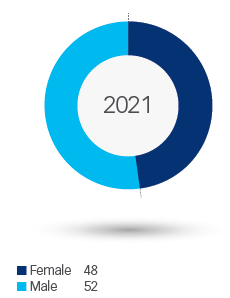
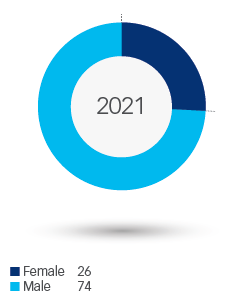
The attraction, retention and development of women employees is a priority for the Group and gender diversity is a KPI monitored by the Social & Ethics Committee. We recognise that the advancement of women within our organisational structures is an important element in addressing gender equity. The percentage of women in the top management roles in the Group indicates that women represent 26% (2020: 19%) of our leadership teams and 48% (2020: 49%) of our total workforce. To empower our female employees, women's forums have been established in our respective South African businesses, providing a platform for women to engage, connect and enable transformation in the gender space. We consider having an external perspective on gender as critical and have strengthened our partnership with the South African chapter of the 30% Club during the year. The 30% Club is a non-profit organisation that campaigns for the greater representation of women on the boards of FTSE100 companies as well as for the empowerment of women in senior positions within organisations. Over 100 of our employees, both men and women, have been exposed to networking sessions hosted by the 30% Club where issues of transformation and gender equality were debated. Our Group Operating Officer and Group Head: Talent Management are members of the 30% Club Steering Committee, demonstrating our commitment to this important issue.
Demonstrating our clear commitment to putting gender issues into the mainstream of our transformation agenda, our Group Chief Executive signed the UN Women Empowerment Principles during the year. By adopting the seven empowerment principles, not only do we have access to a network of like-minded organisations that are committed to gender main streaming, but we also have access to a host of case studies, material and research. We are current participants in the UN WEP South Africa Steering Committee and have a voice in positioning these principles in the South African context.
Aspen is committed to providing a working environment free from discrimination, harassment, violence and bullying, and ensuring that all employees are treated, and treat others, with dignity and respect. As an organisation, we have a responsibility to support any employee who is subjected to violence, harassment and discrimination and to protect employees who may be subjected to gender-based harassment at work or in their communities. Domestic violence and sexual harassment negatively impact the full and equal participation of women in the workforce as they impair employees' physical and mental health and well-being, leading to stress, anxiety, loss of self-esteem, motivation, and even job loss. These heinous forms of abuse contribute to the gender pay gap and affect women's opportunities for advancement, career progression, business productivity and reputation. Recognising the high prevalence of gender-based violence in certain of our operating geographies, we have started designing a five-step approach aimed at addressing the challenge of gender-based violence and harassment. Aspen takes a firm stand against workplace bullying, and policy enhancements are underway to formalise measures in place to protect employees who are subjected to workplace bullying.
We have also implemented specific interventions to create an inclusive working environment for people living with disabilities. This is an important element in our transformation journey in South Africa, where we have targets and plans to attract, develop and retain people living with disabilities in our business. To support this objective, we ran the "Journey Towards Inclusion" campaign, which aimed to create awareness around employees living with a disability and encouraged employees to disclose their disabilities so that we could better support them. Disability awareness training was provided to our human resources and Employment Equity Committees. The intent is to roll this training out to more employees and line managers. We have also provided learnerships to 50 disabled individuals. In our South African business, people living with disabilities represent 1,5% of our workforce.
Employee gender diversity
in the Group (%)
Gender diversity in top
management roles in the Group (%)
Employee race diversity in
South Africa (%)

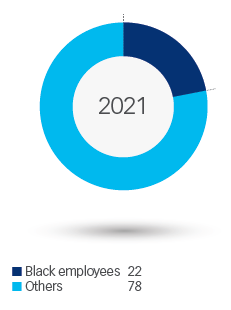
Black employees in top
management roles in South Africa (%)
Empowering historically disadvantaged individuals in South Africa
In line with our employment equity policy and talent management policies in South Africa, we crafted and have implemented the fourth year of our five-year Employment Equity Plan. This plan was developed in conjunction with our South African businesses in accordance with the Employment Equity Act and the Department of Trade, Industry and Competition's BBBEE Code of Good Practice ("BBBEE Codes") to promote the advancement of historically disadvantaged individuals. Targets were set by taking into consideration staff turnover, growth and transformation rates after having consulted with the respective employment equity committees. Each business unit in South Africa has a transformation plan in place and employment equity committees meet regularly to drive delivery against agreed employment equity priorities. In South Africa, black employees represent 83% (2020: 82%) of the total employee workforce. A key focus is to improve representation at a senior management level. However, the percentage of black employees in the top management positions in South Africa suffered a setback this year following restructuring activities reducing representation from 27% to 22%. Representation of female employees in the South African workforce has remained fairly constant at 47%, while women hold 26% (up from 19%) of the top management roles.
Supporting the well-being of our employees
COVID-19 emphasised the importance of formally extending our health and safety measures beyond the boundaries of our workplace to ensure the physical and mental well-being of our workforce. Employee health, wellness and fitness for work are fundamental to enable the effective execution of designated responsibilities and implementation of value-adding initiatives for the business. Employee benefit arrangements include subsidisation of tailored healthcare insurance plans for employees and their direct dependants, where this is required. We supported our employees with paid leave to accommodate mental health and family responsibility where warranted. Core to well-being is also communication, and we have ramped up employee communication with global townhalls, virtual employee magazine, and by encouraging of cross-functional collaborative teams. Employees at selected sites have access to on-site clinics, employee assistance programmes and wellness support programmes. Detailed wellness programmes are implemented in South Africa and across various business units, with a focus on financial planning, stress management, mental wellness and COVID-19 vaccination awareness and support.
Supporting South African employees in the identification and management of HIV/AIDS
We are committed to promoting HIV/AIDS awareness and offering HIV/AIDS-positive employees with the required counselling and support. Each year, we participate in World Aids Day on 1 December and World Tuberculosis Day on 24 March. Employee awareness of these diseases is created through the dissemination of information booklets and posters and making relevant information available electronically to staff. Our HIV/AIDS policy complies with legal guidelines and prescribes confidentiality of the employee's status. Free condom dispensers are installed in accessible areas across the South African and Kenyan sites. In South Africa, our HIV/AIDS management programme is administered by an independent health risk management company. HIV/AIDS-positive employees have access to the disease management programmes through their healthcare insurance schemes, which subsidise the provision of ARVs as well as voluntary counselling and support programmes. Peer educators provide staff with necessary HIV/AIDS prevention and disease management training and, where required, this is also offered to family members of affected employees. In South Africa, eight employees participated in the voluntary HIV/AIDS testing and 64 participated in the voluntary counselling programme.
Providing a safe working environment
Our employees are entitled to a safe and healthy working environment and we are committed to ensuring the safety and security of all of our employees and third parties visiting our facilities. With the outbreak of the COVID-19 pandemic in 2020, we have continued to improve and maintain our workplace response plans to address COVID-19-related health and safety risks at each site. We are proud of our diligent and resilient workforce, who have ensured compliance with impacting and unpleasant COVID-19 non-pharmaceutical control measures. For the collective benefit of our employees and communities, COVID-19 vaccinations have been encouraged through regular training and awareness and the facilitation of on-site vaccination services where possible. With the establishment of the Johnson & Johnson COVID-19 vaccine production line at our Gqeberha site in South Africa, the development of new processes and skills to safely manage the production of a biologically active pharmaceutical product in accordance with international standards was a key area of focus for this site.
Our commitment to safety and security management
Our commitment to our employees is outlined in the Aspen Code of Conduct. The Aspen Code of Conduct for Suppliers and Service Providers echoes this commitment, detailing the expectations and requirements in terms of adhering to our safety standards both in their own workplace and when operating at one of our facilities. The Aspen Group Standard for Contractor Management further supports the identification, evaluation and control of risks associated with on-site contractor and subcontractor activities.
The prevention of work-related injuries, permanent disabling injuries and occupational diseases is a key focus area for site management teams, particularly at the manufacturing facilities where the inherent risks of health and safety incidents, including chemical exposure, are high. Health and safety baseline and issue-based risk assessments are conducted to identify and evaluate the magnitude of our health and safety risks through a dynamic, formal and structured process. Risk assessments are the foundation for the establishment, implementation and maintenance of our SHE management systems across the Group and the selection and mitigation influence of required control measures is determined by the principle of the hierarchy of controls. Issue-based risk assessments are conducted for the management of changes and any new projects prior to the design phase to ensure that all health and safety risks are considered and mitigated. New operations acquired are systematically incorporated into the Aspen Group SHE programme.
Due to the nature of pharmaceutical and chemical products, compliance control measures are in place across the supply chain, to address the safe and compliant handling and transport of all materials and products. All SHE training needs are essentially identified through applicable legal requirements and risk assessments and formally managed through internal and external training programmes. Competent registered or approved training service providers are appointed through a procurement and selection process.
SHE awareness and competency training programmes are conducted to promote the effective implementation and maintenance of SHE policies and procedures at no cost to personnel working for, or on behalf of, the organisation. Employee competency and the effectiveness of training is generally measured through formal assessment questionnaires, job observations or the performance review process. Formal SHE representation and management structures are established at all manufacturing sites in order to create a platform of consultation and participation on the development of key system elements such as risk assessments, operational work instructions and incident investigations. These health and safety workforce forums also provide a mechanism for discussion and resolution of any SHE matters and sharing of pertinent health and safety information. Regional regulatory requirements would dictate the operation of health and safety workplace forums in terms of frequency, membership, responsibilities and authority for decision-making. Practices that penalise participation in the reporting of incidents, hazards, risks and opportunities are discouraged by addressing identified obstacles and barriers, and employees who wish to remain anonymous are protected against reprisals through the Tip-Offs and Whistleblowing policy.
SHE compliance is monitored and managed on a day-to-day basis and SHE KPIs form part of site management reporting processes. The Group SHE function develops and promotes Aspen's SHE standards and monitors the compliance and effectiveness of certified SHE management systems across the business units. Independent SHE legal compliance audits are conducted biannually across all manufacturing facilities. The Group SHE function reviews the audit findings to establish trends and focus areas and tracks the status of corrective action plans. The Board monitors material SHE KPIs on a quarterly basis and, through the Social & Ethics Committee, monitors the effectiveness and compliance of SHE management systems across the Group.
Ensuring employee security
In the interest of employee safety and asset security, access controls and security systems are in place across all manufacturing and commercial sites to prevent unauthorised entry. Additional measures are implemented by local management teams to ensure employee safety in countries where the risk of social and/or political unrest is high.
Managing SHE compliance
We align our health and safety management systems to global standards and all fully commercialised primary manufacturing facilities, as well as six of seven API facilities, have successfully transitioned to ISO 45001. Our health and safety certification covers 88% of employees within manufacturing operations. Due to the limited scale of their operations, the Sioux City and Ghana sites are not earmarked for certification. During this year, our Kenya site achieved its ISO 45001 certification. The ISO 45001 certificates and SHE policies for all internationally certified facilities are displayed across the manufacturing sites and are available online. Maintenance of an internationally recognised health and safety management system enables our sites to keep abreast of all applicable health and safety legal requirements, maintain a programme for evaluation of compliance and manage instances of non-conformance.
Measuring SHE performance
Independent SHE compliance audits were performed at 21 of the Group's manufacturing business units in 2020. An internal legal compliance assurance process was conducted in 2021 and no exceptional health and safety legal compliance findings were noted. All legal findings are managed by each facility through a formal Corrective and Preventive Action system and the Group SHE function monitors the compliance status and reports thereon to the Social & Ethics Committee. No fines were paid in respect of health and safety non-compliances this year.
To align our practices with the changes recommended by the GRI, a transition to two new material health and safety KPIs was made in FY2021. TRIFR and High Consequence Incident Frequency Rate ("HCIFR") have replaced our previous measures for health and safety performance, i.e. disabling incident frequency rate and LWDFR. These new KPIs provide a more accurate reflection our health and safety profile and approach to incident prevention through disclosure of a holistic TRIFR and refined HCIFR view of our health and safety performance. Greater insight into causal factors and hotspots are also obtained through the identification of emerging health and safety risks on minor medical cases.
The TRIFR reflects the percentage of employees who experienced reportable incidents, which include minor medical cases other than first aid treatment, over the 12 months ended 30 June 2021. The TRIFR tolerance was set at 2,00 for 2021 and a rate of 1,10 was achieved. The HCIFR indicates the percentage of employees who experienced a work-related injury or ill-health, over the 12 months ended 30 June 2021, where the worker could not, did not or was not expected to recover fully to pre-incident health status within six months. The HCIFR tolerance, set at 0,05 by 2025, was achieved (0,03), although two partial finger amputation cases occurred at our East London facility in South Africa. The tolerance levels are reviewed and approved by the Social & Ethics Committee on a two-yearly cycle.
During the year, 76 reportable incidents were recorded across the Group's manufacturing facilities compared to 89 incidents in the prior year. It is pleasing to report that no occupational fatalities related to our own workers and external contractors were experienced during the year. This is now the eighth year without such fatalities and there is ongoing focus to ensure Aspen maintains this record. Formal systems are in place to ensure that incidents are recorded, investigated and analysed in a structured and timely manner in order to identify root causes and prevent the recurrence of incidents.
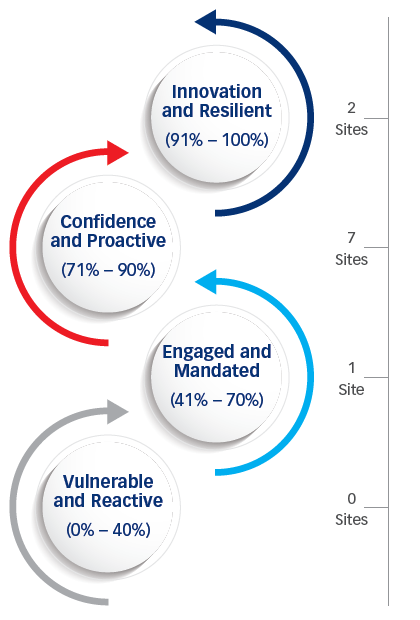
Slips, trips and falls are the highest contributor to our total reportable case rates. Ergonomic cases and injuries caused by moving objects, mainly due to unsafe behaviours, also contribute significantly to our incident rates. It has been acknowledged that having a good formal SHE Management System in place is insufficient as we rely on the behaviour of our people to turn these systems and procedures into reality. In an effort to promote a positive SHE culture and behaviour within the Aspen Group, the WeCare SHE Culture Survey was launched in 2021. This survey aims to provide insight into what all levels of employees should stop, start and continue doing in order to create a culture of care and a mindset of "beyond compliance" to enable excellent SHE performance and continual improvement. A baseline assessment consisting of three weighted components (survey questionnaires, level of participation and incident history) was completed by 77% of our manufacturing sites. The outcome of the baseline survey indicated that the majority (70%) of the participating sites were at the "Confident and Proactive" level. The identified improvement opportunities will be further investigated through consultation with the employee health and safety forums in order to improve the SHE culture. Progress on SHE culture will be assessed and disclosed every two years.
In an effort to formally increase our health and safety coverage and establish relevant health and safety KPIs for our commercial business units, a motor vehicle accident ("MVA") survey was conducted in 2021. Ten commercial business units (36%) representing 89% of our sales and marketing representatives located in South Africa, Latin America, Australia, Europe and Asia participated in the survey. The aim of the survey was to establish a baseline on the frequency and severity of MVAs and the extent of motor vehicle safety training and awareness. The outcome of the survey indicated an insignificant history of MVA injuries and the need for a dedicated reporting and investigation mechanism for the monitoring of MVA statistics for the Group. An MVA incident rate would thus not be considered at this stage, but the number and severity of MVA injuries will be disclosed from 2022.
Ensuring commitment to continual improvement
We are committed to the continual improvement of health and safety management and performance through reasonably practicable measures. Incident statistics are utilised as an input for the identification of improvement opportunities. Continual improvement is demonstrated by the establishment of measurable health and safety objectives which are regularly monitored to ensure achievement thereof. The status of the various continual improvement programmes is also discussed at employee health and safety workforce meetings.
A formalised Group SHE Compliance function was also established during the year and will, as part of the Group's Ethics & Compliance function, be aimed at assurance provision around this important aspect.
Accolades
Aspen Global Incorporated received its certification as a Top Employer 2021 from the Top Employers Institute in recognition of the achievement of excellence in employee conditions, thereby contributing to enriching the world of work.
Aspen Notre Dame de Bondeville's score of 92 out of 100 on the Professional Equality Index, corresponds to equality between women and men in terms of access to employment, training, professional promotion, working conditions, health and safety at work and the balance between professional and personal life.
Additional information available  online:
- Aspen Sustainability and ESG Data Supplement
- Social & Ethics Committee Report
- Employment equity progress reports for FCC and Pharmacare
- Aspen Code of Conduct
- Communication on Progress Report in respect of Aspen's application of the UN Global Compact's 10 Principles for 2021
- Responsible corporate citizenship philosophy
- Aspen Code of Conduct for Suppliers and Service Providers